Dying Embers out now

Dying Embers out now

Monday, 26 May 2014

The ghosts of Sydney's past

Having recently joined the Historic Houses Trust, we decided to make the most of it with a day out in the centre of Sydney. A bus ride took us firstly to St Mary's Cathedral in College Street. The skies were getting darker, and as we walked across Hyde Park the rain poured down. Luckily I had brought umbrellas, but by the time we found shelter behind its huge wooden doors, we were pretty wet... and cold. We weren't allowed to take photographs inside the building, but the children loved exploring the huge space within. I'd be lying if I said it didn't make me think of the Cathedral of Saint Bavon, from Aickman's The Cicerones. There were certainly some Americans there too; but that's another story!

St Mary's Cathedral is an impressive building. The rain was just starting to pour...
St Mary's Cathedral, Sydney
One of many statues dotted about the perimeter of the Cathedral.
We couldn't get close enough to them to find out who they
represented, but this one is fairly obviously St Mary!
From there, we walked to Hyde Park Barracks, a beautiful sandstone building with a rather ugly past. Built to the order of Governor Lachlan Macquarie, it was designed by convict architect Francis Greenway and constructed by convict labour in 1819. Until 1848 it provided accommodation for convicts employed by the government. Heartbreakingly, I found out that the youngest convict ever deported to Australia was sent here, a nine-year old boy who stole a watch while living on the streets in London (no doubt just to get money with which to buy food). My own daughter is nine, so it came as a shock to realise such a young person could be sent so far and so alone. Apparently, he died at just 14, having been sent to work in the Newcastle coal mines. Such tragedies were no doubt commonplace back then.

The interior of Hyde Park Barracks. It's been well restored, with some
evocative audio/visual installations... which are quite spooky!

All this means that the sympathetically restored interior probably contains many ghosts. There are also some interesting audio/visual installations, which work very well. The visitor can look through the guards' peep-holes into the old cells and dormitories, and there are shadowy figures set up to move at the edge of your field of vision. The accompanying noises, groans and snores, add up to a spooky experience, especially with such dark, inclement weather like when we were there. Well worth a visit, and it certainly provides fodder for a scary story or two!

One of the peep-holes through which the guards would
keep an eye on those untrustworthy convicts
I'm sure some of these corridors are walked by the ghosts
of Sydney's shameful convict past!

Sunday, 25 May 2014

Review: Tales of the Strange and Grim, by Andrew Hall

Tales of the strange and Grim has turned out to be one of those books I have found difficult to stop reading. I confess, I'm a huge fan of short, strange stories, and Andrew Hall has obviously shared some of my influences.


This intriguing collection opens with Mr Volinov, which introduces the reader to Hall's smoothly idiosyncratic writing style: 'In the world in a country in a city in the park old Sergei Volinov was drinking juice.' Not just any juice, mind you, but a patented elixir. For some time, Volinov reaps the benefits of eternal youth, 'a Norse god made of chiselled wood in a torn and bloodied shirt'. However, having sold his belongings (and his soul?) for a second chance at a vigorous life, the question remains unanswered; what next? In Tabitha, an unsuccessful writer gets inspiration from the strangest source imaginable, but perhaps that very inspiration has arrived just a little too late. Next up is George, the fascinating portrait of a tyrant on the English throne; but in this case, a modern-day tyrant and all that entails. The juxtaposition of 21st-century attitudes within an almost medieval framework makes for a thought-provoking and grimly humorous tale.

In what is perhaps my favourite story here, The Feathered Man takes the reader on a rollercoaster ride through the underbelly of a poverty-stricken city. Its citizens are terrorised by a 'satanic freak, prowling its towered heights and sewered depths', preying on the 'whores and drunks and criminals'. Acting like some kind of bizarre superhero, however, the Feathered Man soon clears the streets of his very sustenance; and his own success leads to his ultimate downfall. Peace of Cake imagines what might happen if works of art come to life, and what to do with the resulting intrusions into reality. You may not look at a food processor in the same way again... Stonewall is a longer story, almost a novella, in which supernatural elements are blended with traditional storytelling to produce an epic saga involving traitors, knights and tragedy. The final tale, Time Apart, brings us back to the present day. Tom wakes one morning to find he can stop time with the click of his fingers. At first, this seems to have no downside, and he exploits his luck relentlessly. Soon, however, the question must arise; what will happen for the rest of time itself?

This is a vibrant, sharply written collection, full of interesting ideas and wit, and I would recommend it for anyone who likes their entertainment slightly left-of-field. Hall's writing style is ideal for these thought-provoking vignettes, most of which could be expanded upon to great effect; my only criticism is that there could be more of it! I'm glad I discovered this author, and I'll be looking out for anything from his pen in the future.

Wednesday, 14 May 2014

Best reads of 2014 so far

It's been a busy and productive year for me, finishing off my debut collection of short stories Dying Embers for publication by Satalyte Publishing. However, I've also found the time to read some excellent short story collections, and a marvelous novella. (Not that I like the word novella; wasn't L'Etranger by Camus only a hundred pages, yet honoured with the title of novel?)

So in no particular order, here are some of my favourites of the year so far.

Eric Brown's intriguing collection, Ghostwriting. It kicks off with the
memorable The Man Who Never Read Novels
Tenebrous Tales by Christopher Barker includes a haunting story
inspired by the great Nick Drake. What's not to like?
Another great book from Tartarus Press,
Mercy and Other Stories
by Rebecca Lloyd treats the
reader to 16 fascinating, otherwordly tales. Review soon
http://www.smashwords.com/books/view/282587
The aliens are coming! You'll be intrigued by the complex,
poignant world created by Mark Fuller Dillon in
All Roads Lead To Winter
. Review soon
Enter The Dark is Light Enough For Me at your peril;
these scarily bizarre tales grab you and won't let you go.
A suitably dark collection from John Claude Smith
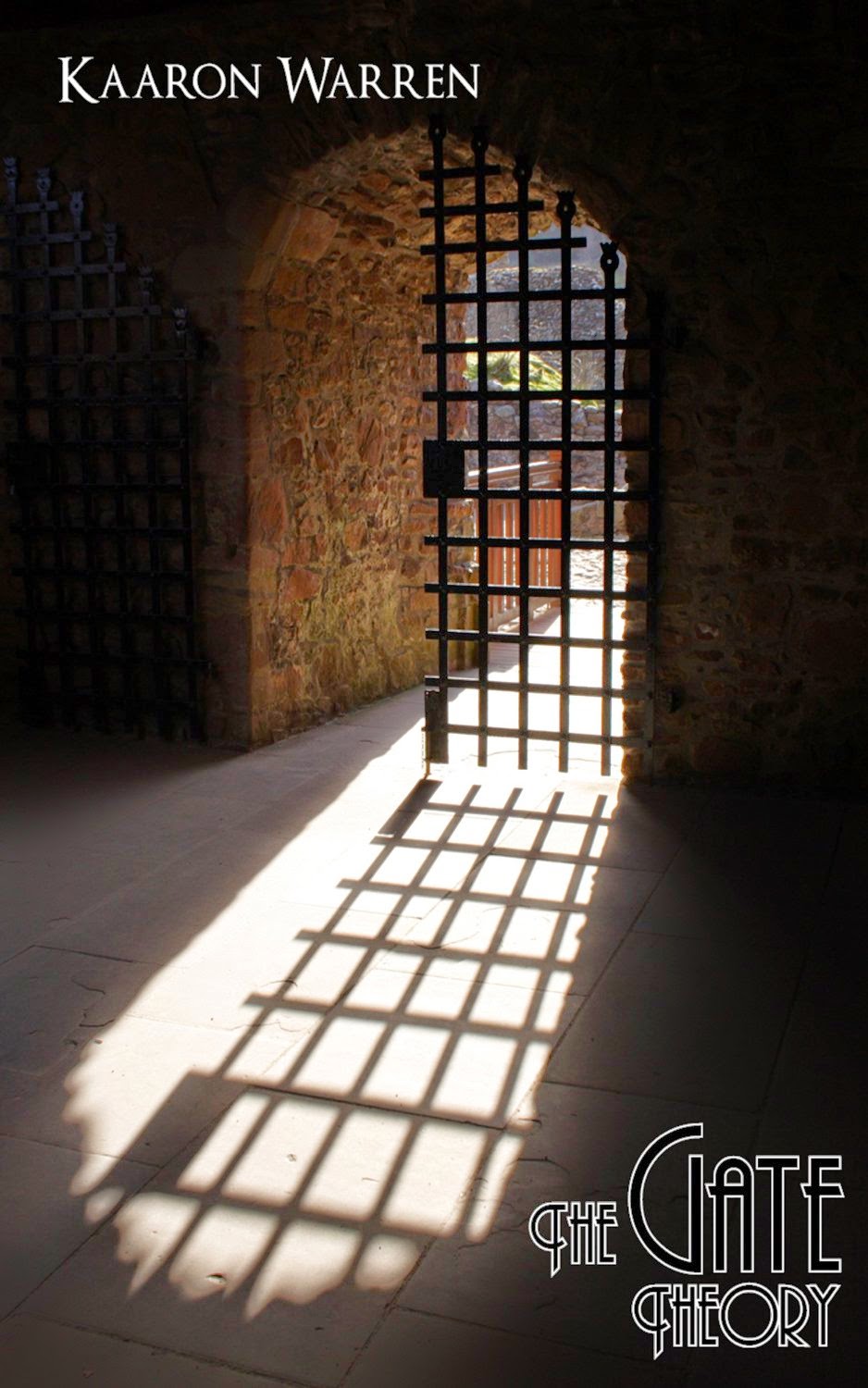
I'm a huge fan of Warren's work, and The Gate Theory
is essential reading. Compellingly so!
David Haynes's latest is atmospheric storytelling at its best
If you're afraid of the dark, don't read this grimly superb collection
edited by Ross Warren; For the Night is Dark focuses on
that most primeval of fears. Great writers, great stories

I'd love to review all these books and more, but there aren't enough hours in the day, so keep an eye open for the few I manage. In the meantime, I'm happy to suggest you get hold of these publications and have a good read. The Night is Dark, indeed!

Saturday, 26 April 2014

Proofs approved for Dying Embers

Well, it's nearly here. Yesterday I looked over the final proofs for my first short story collection, Dying Embers. The publishers, Satalyte Publishing, have approved them and they've gone off to the printers. The ePub version is up at Smashwords, available for pre-order, and the other formats will be from Amazon on Monday April 28.

The cover has been tweaked, and the blurb added for the rear of the jacket. Here is a screenshot of the cover for the paperback;


Here are a couple of screenshots from the interior;


It's been a long time arriving, but the process has been fascinating. It really never occurred to me when I started to write a few short stories, adapted from my memoirs, that anyone other than family members would read them. Then, with the encouragement from some of those same family members, and also from one or two authors very generous with their time, I managed to get a few of them included in anthologies. From there, I planned to self-publish; but Stephen Ormsby from Satalyte Publishing thought my stories would fit well in his stable, so everything changed again. Last November, I started to work with Stephen to polish and finalise my tales, to great effect. I'm also very pleased with the layout and the way the book flows. I can't wait for people to be able to read the thing!

Thanks are due to James Everington both for his encouragement and for very generously writing a foreword for the book, and also to Paul Hodge for all his support. Also, thanks to Maria Savva for her friendship and advice, and Dionne Lister for our supportive chats! It's been great to get to know other authors, even if it has so far been mainly over the internet.

I will post links for purchase on Monday, and update my website too.

Wednesday, 23 April 2014

Review: The Master of the House, by John Gaskin

John Gaskin's latest collection of short stories, The Master of the House, carries on in the same rich vein as his last, The Long Retreating Day; that is, in the style of the classic English ghost story. Here crouch 12 superb tales of the unknown and the numinous, each one as finely crafted as could be wished, ready to pounce upon the unsuspecting reader's imagination.


The Memento Mori outlines the unlikeable Dr Joseph Borman's quest for both notoriety and profit. His acquisition (for a reduced price) of said object brings with it rather more than he had expected, including a somewhat unpleasant smell. Could it be a threat to him from a previous age? What connection is there to a seemingly innocuous traffic accident? In Wolvershiel, the reader is whisked off to a barren northern landscape, where the protagonist stumbles upon an impossible house, which seems to act as some kind of portal into the darkness of sins from the past. A foggy, freezing winter at an Oxford railway station is the setting for Addendum to a Confession, involving a murder, a subsequent unreliable confession, and ultimately, psychiatry... but is the narrator entirely trustworthy? In Wings, Craig Morgan finds out the hard way that long-undisturbed flying creatures should be left well alone, when felling an ancient tree. The warnings from Ché, the exotic au pair, go unheeded – and Craig finds himself strangely usurped. Party Talk is the tale of an unsettling conversation at a lunchtime buffet between the protagonist, a writer of "tales of the uncanny", and a ghostly old woman. Part of Gaskin's talent as a writer is in knowing what to leave out; and this story expertly weaves its way into the reader's consciousness by the subtle use of those dark spaces between things.

The Double Crossing is perhaps the standout story for me, being a wonderfully dense tale of jealousy and duplicity in and around Oxford university life. It unfolds gradually, like a cross between two of Aickman's creations, Residents Only and The Waiting Room. Gaskin's work often features what could be termed an anti-hero, and in this case the reader is spoilt for choice. The Revd Dr Jonathan Blackstone fits the bill here; as does the Bursar, Stuart Budden, and so too the Chaplain. So when the matters of appointment and the details of the College pension are to be discussed, the machinations of the establishment, and disrupted train travel arrangements, come into play. The resulting misunderstandings, and an uncanny vision on a station platform, combine to showcase this writer's superb ability to both intrigue and chill.

Almost but not quite a conventional haunted house story, The Master of the House takes place in suburban London, and concerns itself with the purchase of a house, the remainder of a semi-detached pair (the adjoining semi missing as it was part of a bomb site). This tale's protagonist helps his sister, Amelia, with its purchase and renovation, and they both become alarmed at the strange sounds from certain parts of the building. The unconventional part of this tale involves its resolution, involving a letter from the time of the ancient Greeks and its connection with modern times. The New Inn Hall Inheritance is another tale from the dreaming spires of Oxford; Gaskin writes with assurance in these surroundings, creating an expert and enjoyable Jamesian feel. The collection concludes with Where Shadows Lead, which ventures out onto a wild moor at the twilight of a winter's day. David's Land Rover lets him down on his way home, and he badly misjudges his walk back across the boggy landscape to effect a short cut. Darkness soon falls, and with it comes mist and freezing temperatures. Becoming lost, he realises he is unlikely to last the night. Gaskin's descriptive writing here chills the soul, and provides the perfect climax to this evocative and satisfying book.

The Long Retreating Day was one of my reads of last year, and sure enough, The Master of the House has been one of my reads of 2014 so far. The prose is superb, the chills genuine, the occasional dry humour is perfectly judged, and the stories are complex and atmospheric. Another winner from Tartarus Press, not to be missed by everyone who loves the ghostly and the strange.

Saturday, 12 April 2014

Review: Far Away in Time by Maria Savva

Maria Savva has released a new collection of short stories, Far Away in Time. I have enjoyed her previous collections, Love and Loyalty, and more recently, 3. Some of the tales in Far Away in Time are of a somewhat darker nature, which appeals to me; the opener, The Ghost of Christmas Past, paves the way. Roland recalls a tragedy which occurred at that special time of year, and of how the subsequent guilt has changed his life. This bleak but thought-provoking story is followed by Far Away in Time Parts 1 and 2, wherein the reader meets Mr Silverfrost, 'the old man with the very white hair and the strange squint'. Memories blur the present; is he really who Angie remembers? Why has Carrie got no recollection of him? What is the liquid in the phial that seems to have such magical properties? When she inadvertently prevents a crime, Angie finds herself a helpless passenger in a confusing cycle of events. I wonder if there might be a Part 3 in Maria's next collection... Echoes of her Dreams is the poignant tale of Charlene, a selfless mother who puts her own life on hold in order to help others. She dreams of experiencing more of the big wide world, but finds her true calling is closer to home. Can the dead contact the living from beyond the grave? In A Sign, this longstanding riddle is pondered in a sensitive way. Grace makes a discovery in her new house, which unlocks events from the past, setting a series of events in motion which lead ultimately to some kind of redemption. Following on, Tragedy of Love is powerfully concise. Philip delays making his move with Selene, with tragic consequences; this tale makes the reader feel there's no time like the present. The Beach is next, and would not be out of place in an anthology of strange tales. Mike and Toyah have enjoyed a holiday by the sea. Afterwards, Mike has a vivid nightmare which comes back to haunt him from from an unexpected source. Savva's description of panic in the surf is hard-hitting, conjuring a strong image which will stay with me for some time. Finally, Betrayal tells the story of a complex set of circumstances combining to make Desiree realise the truth behind her family's relationship. Does she know the real reason behind her father and stepmother's change of heart towards her? Or will it be too late for any kind of resolution? These are intelligent, well-written stories about real people confronting real issues, confronting the past and looking to the future; and, as ever, I look forward very much to Maria Savva's next collection.
http://www.amazon.com/Far-Away-Time-Maria-Savva-ebook/dp/B00J0G11S0/ref=sr_1_3?s=digital-text&ie=UTF8&qid=1397362572&sr=1-3&keywords=maria+savva
Far Away in Time, Maria Savva's latest
collection of short stories

Thursday, 10 April 2014

Dying Embers; full details

April 28 is the big day!

The eagle-eyed among you will have noticed that I have reinstated the countdown timer on my website. This can only mean one thing; the publication date for my first collection of short stories, Dying Embers, is rapidly approaching. If this gives you a sense of deja-vu, well that's because I was about to self-publish the book back in October of last year, but then Satalyte Publishing stepped in at the last minute with an offer to do so themselves. Since then, I've been working with the great Stephen Ormsby to fine-tune the stories to a degree I could not have managed on my own. I'm very grateful for the time and trouble the good people at Satalyte have taken to get the very best result.


Dying Embers will consist of 10 strange adventures and an insightful foreword by James Everington (his first, I believe, so I'm greatly honoured). Here are some details of the stories;

The Next Terrace
The past collides with the present, and childhood bonds are stretched to the limit in a tale inspired by Dante's Inferno.

Playing Tag
An historic building holds the key to a terrible secret from Letherby's youth. Why is he drawn so powerfully to the mysterious Pavilion?

Unit 6
The alien landscape of a network of warehouses provides the background to a remarkable transformation. Or does it?

The Source of the Lea
Pocock witnesses something on the river bank which changes the course of his life... Did it really lead to him discovering the true source of the River Lea?

Necessary Procedure 
An ill-fated property search leads firstly to admission, then a strange form of retribution; and, ultimately, a terrifying reunion.

Abraham's Bosom
Australia's rugged coastline gives up its past, forcing Merewether to confront his own dark memories.

In Transit
A passenger on an international flight finds out that he is not master of his own destiny. Finding out who is, though, is quite another matter.

Building Bridges
Brentwood realises just how much he has neglected his family; will he live to regret it?

La Tarasque
A castle in the south of France reveals its history to Suzanne in the most unexpected of ways. How can she distinguish the past from the present?

Fingerprinting
Rural Australia proves less welcoming than Preston had hoped, forcing him to confront the guilt from his past.

I have written a brief afterword with some vague explanation of my influences to finish it all off.
It will be paperback and Kindle from the beginning.

I must ask you to excuse some self-promotion over the next few weeks; I've never had a collection of short stories published before, and I feel a certain urge to let people know about it!